
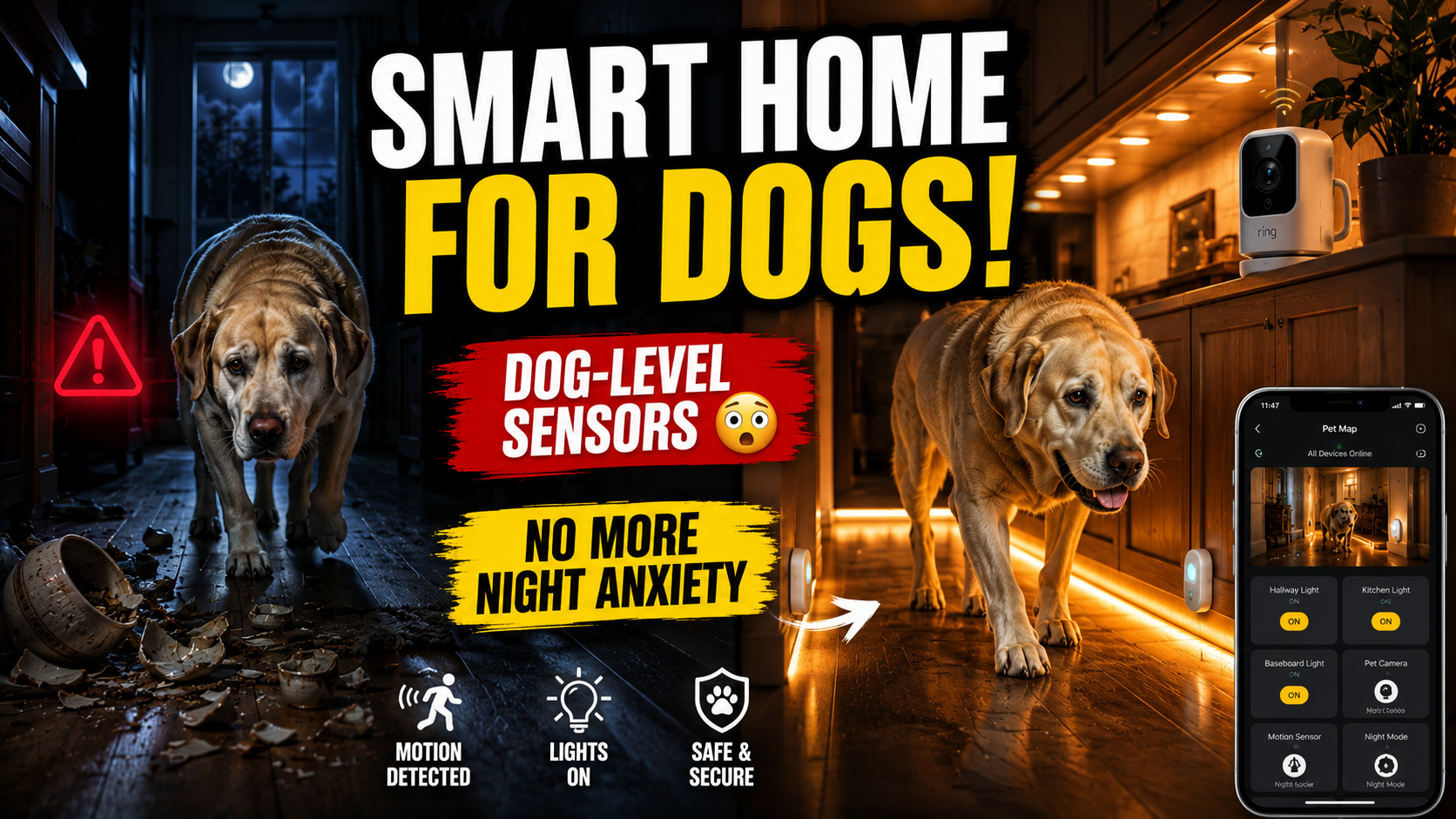
The “Smart Home” Pet Map: Why I Placed Motion Sensors at Dog-Level
Have you ever been startled awake at 3:00 AM by a loud thump or the sound of something breaking in your living room?
I have. It’s a heart-stopping sound. For a long time, I thought my senior dog, Max, was just getting clumsy in his old age. I’d find him standing in the middle of the dark hallway, looking confused, or worse, I’d find a knocked-over vase in the morning.
As a tech geek, I realized I was failing him. I have a house full of smart gadgets—I can turn on my coffee maker from my phone—but my best friend was literally wandering in the dark. That’s when I decided to build the “Smart Home Pet Map.” This isn’t just about putting up a night light. It’s about re-thinking home automation from a dog’s point of view. Here is how I did it, the mistakes I made, and why every senior pet owner needs to do this.
The Problem: Why Your “Night Vision” Isn’t Enough
A lot of people think dogs can see perfectly in the dark. While it’s true they see better than us, senior dogs are different. Just like humans, their eyes change. They get cataracts or something called nuclear sclerosis, which makes their vision cloudy.
In total darkness, a senior dog’s world becomes a blur of scary shadows. A black rug looks like a hole in the floor. A chair leg looks like an obstacle. This leads to “Midnight Anxiety.” They start pacing, panting, and bumping into things because they simply can’t find their way to the water bowl or the door.
I realized that if I could give Max a visual path—a map made of light—his anxiety would disappear.
The “Dog-Level” Breakthrough: My Big Mistake
When I first started this project, I did what most tech guys do: I over-engineered it. I put high-end motion sensors on the ceiling and linked them to my overhead smart bulbs.
It was a disaster.
-
The Angle Problem: Ceiling sensors are made for 6-foot-tall humans. They often didn’t “see” Max until he was halfway across the room.
-
The Blindness Problem: Turning on a 60-watt overhead bulb in a pitch-black room is blinding. It scared Max even more, and it definitely woke me up.
The Fix: I moved the tech. I took the sensors off the ceiling and placed them 12 inches off the floor.
By placing sensors at “dog-level,” the lights trigger the very second Max shifts his weight to stand up from his bed. He doesn’t have to wait for the light; the light waits for him.
How to Build Your Own “Pet Map” (The Step-by-Step Guide)
You don’t need to be a programmer to do this. You just need to think like your dog. Here is the exact process I used for the PetOfParadise home setup.
Step 1: Map the Routine
Before you buy anything, watch your dog for a few nights. Where do they go? Max has a very specific “Midnight Loop”:
-
The Bed (Where he starts).
-
The Hallway Corner (Where he usually gets confused).
-
The Kitchen (Where the water bowl is).
-
The Back Door (In case he needs a bathroom break).
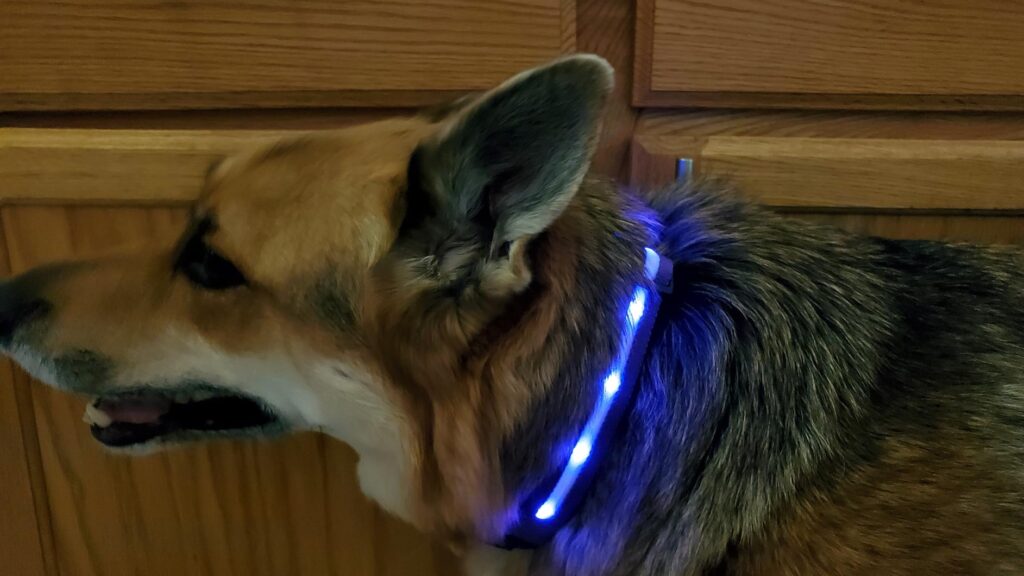
Step 2: Choose “Soft” Lighting Colors
This is a pro-tip: Avoid white or blue light at night. It ruins your sleep and is too harsh for old dog eyes. I use Amber or soft Orange. It’s easy on the eyes and provides enough contrast for them to see depth without being blinding.
Step 3: Installation (The Under-Cabinet Secret)
I installed LED strips under the baseboards of the hallway and under the kitchen cabinets. This creates “toe-kick” lighting. It illuminates the floor—where the dog is looking—without shining into your eyes while you’re in bed.
The Gear I Tested and Trusted
I spent my own money testing different sensors and lights. For a senior dog, you need speed. If the sensor takes 2 seconds to turn on the light, the dog has already tripped.
Here are the top 3 products that make up Max’s current Pet Map:
1. The Brains: Kasa Smart Motion Sensor
This is the most sensitive sensor I’ve found. I have one placed right at the edge of Max’s bed. It’s battery-powered, so I didn’t have to run any wires that he might trip over. The response time is nearly instant.
2. The Path: Govee RGBIC LED Strip Lights
These are the “glow” of the map. I love the Govee strips because you can control the brightness down to 1%. I keep ours at 5% brightness in a warm orange color. It’s just enough light to guide Max safely to his water.
3. The Eyes: Ring Indoor Cam (2nd Gen)
I installed this camera in the kitchen. Why? Because sometimes Max gets to the water bowl and then forgets how to get back. I can check my phone from bed, see if he’s okay, and even use the Two-Way Talk feature to say, “Max, come back to bed,” which guides him home by the sound of my voice.
Why This is the Ultimate “Care” Hack
Some people might think this is “over the top.” They’ll say, “It’s just a dog.” But those people don’t understand the bond we have with our senior pets.
When I finished the Pet Map, Max’s nighttime anxiety stopped immediately. He no longer pants or paces. He knows that the moment he gets up, his path will be lit. It gave him back his confidence and dignity.
As a tech specialist, I believe the best use of technology isn’t for us—it’s for those who can’t help themselves. A $20 sensor can save a senior dog from a scary fall or a night of panic.
Conclusion
If you have an older dog who is starting to “stall” or act scared in the dark, don’t just leave a hallway light on. Build them a map. Move your sensors down to their level. Use soft, warm colors.
At PetOfParadise, we believe every walk, every nap, and even every midnight drink of water should be a paradise for your pet. Stop letting them wander in the dark. Light the way for them, just like they’ve brightened your life for all these years.

Pankaj | Founder & Lead Pet Tech Specialist
Hi, I’m Pankaj. I’m a pet travel enthusiast and a tech geek who believes our four-legged friends deserve the best gear available. I started PetOfParadise to cut through the marketing noise and provide pet parents with honest, data-driven reviews. From testing GPS collar signal strength to measuring airline-approved carriers, I personally oversee the testing of every product we recommend. My mission is to ensure that your next pet tech purchase is a smart one, focusing on safety, durability, and practical value.